
Frequently Asked Questions about Bearings
We offer a wide range of bearings for the Ukrainian market for the industrial agricultural machinery, construction mechanization, commercial vehicles, and processing industries.
How to check bearing wear?
A worn bearing is like a squeaky wheel: it still works, but not for long.
First, pay attention to noise, vibration, or play – these symptoms often signal a problem.
Carefully inspect the bearing: lubricant leakage, discoloration of the metal, traces of friction, or scoring are all signs of overload or the early stages of failure.
If it is a bearing assembly, check the integrity of the seals and the uniformity of rotation.
Ideally, remove the bearing and rotate it by hand: any clicking sounds or rough, tight movement are warning signs.
Regular inspection adds 1,000 hours to the service life of your equipment.
How to maintain mechanisms with bearings?
A bearing is the heart of many mechanisms — and like any heart, it needs proper care.
Regularly clean the unit of dust, monitor the condition of the lubricant, and prevent dry friction.
Important: do not overload the equipment – bearing service life directly depends on operating conditions and load levels.
Pay attention to extraneous noises and vibrations: they often signal wear and tear before failure.
When dealing with large machines or complex assemblies, do not neglect scheduled replacement, even for high-quality bearings.
Proper maintenance is not just about saving money, it is about extending the life of all your equipment.
What are the differences between bearing types?
The world of rotation has its own heroes.
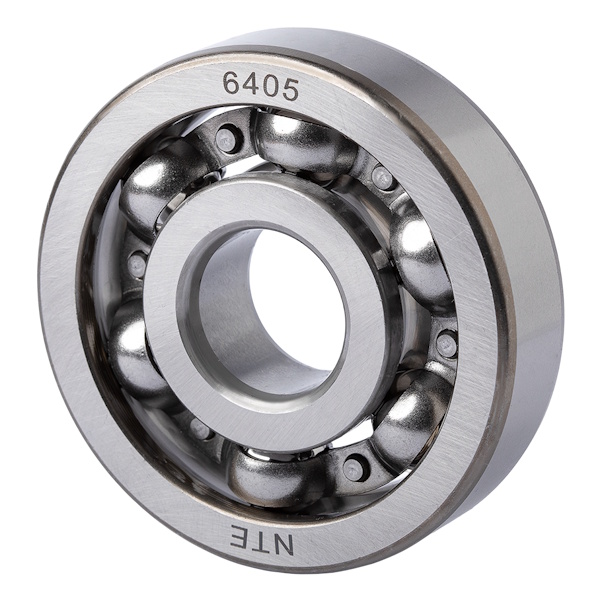
Ball bearings are the universal “long-distance runners.” They are light, precise, and perform excellently at high speeds.
They are lightweight, precise, and work perfectly at high speeds.
But when it comes to withstanding heavy loads, roller bearings take the stage.
Their rollers distribute force more efficiently, making them ideal for heavy equipment and industrial mechanisms.
As for bearing assemblies — they are like “bearings with support”. They come pre-mounted in housings and are ready for operation without additional adjustments – true plug-and-play solutions in engineering.
They all belong to the class of rolling bearings, but each plays its own role in the larger engineering system.
How to choose miniature bearings
When selecting small-size bearings, it is important to consider not only dimensions but also operating conditions – load type, rotational speed, and working environment.
The price of miniature bearings depends on the material, type of seal, manufacturing precision, and manufacturer’s brand.
Comparison table of miniature bearings by key parameters
Parameter | Standard Bearings | Miniature Bearings | Notes |
|---|---|---|---|
Size | Large | Small (3–30 mm) | For precision mechanisms |
Maximum speed | Medium | High | Improved accuracy and balance |
Weight | High | Low | Reduces load on the shaft |
Service life | Depends on type | High with proper | Stability and smooth operation are critical |
Seal types | Various | Often sealed | Protection against dust and moisture |
⚠️ The use of unsuitable or low-quality miniature bearings can result in increased friction, premature wear of the unit, and increased repair costs. This is especially critical for precision mechanisms, where even minor deviations from standards reduce overall operational stability.
If you need to buy miniature bearings with quality assurance and technical support, our company offers a wide selection of components for industrial equipment. We provide fast delivery throughout Ukraine.